A place for charging
The prototype, the decision to move charging off the counter, and the questions that follow.
A room is shaped by small decisions. Where a light falls. Where a chair sits. What stays on the counter. Charging is part of that arrangement, even when the charger itself receives little attention.
For GANG, the starting question is where charging should happen. Our first answer brings it onto the wall.
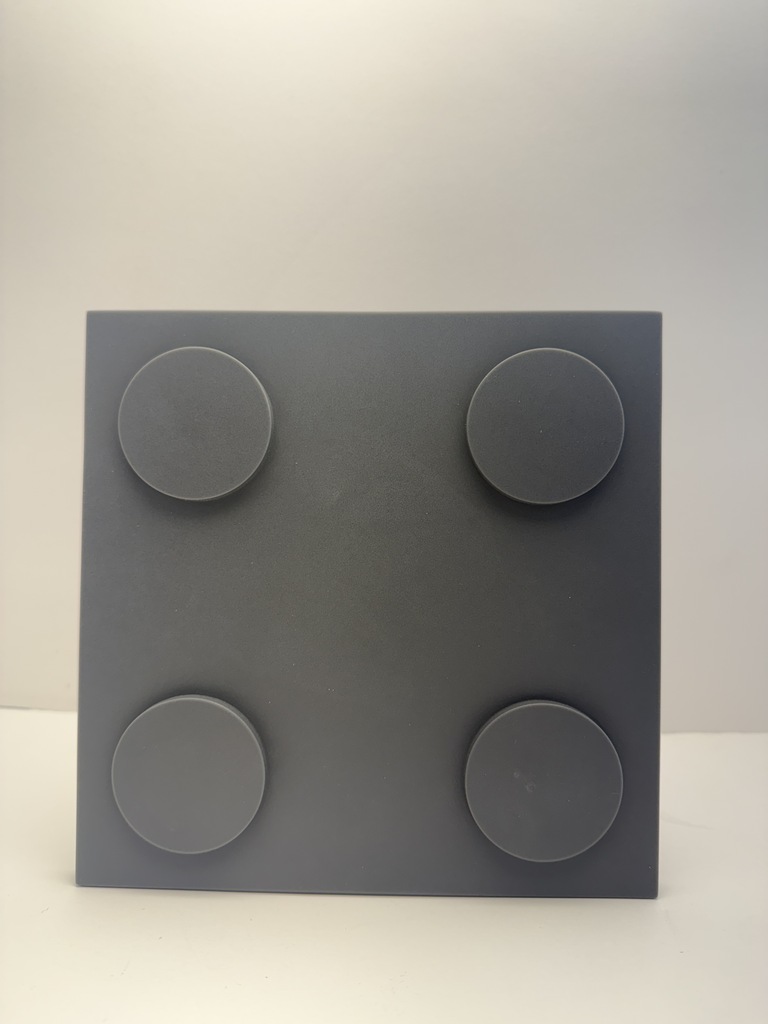
GANG–1 prototype, shown resting on a surface. The intended format is wall-mounted. Final details may change.
The counter and the wall
A charger placed on a counter shares that surface with everything else we put there. Moving it to the wall leaves more of the counter available and gives charging a defined place in the room.
That choice also makes the object more visible. Its outline, depth, and position become part of the space around it. The relationship with the wall deserves the same attention as the front of the product.
The prototype makes one part of that idea tangible: four circular charging zones arranged on a single rectangular surface. It is a way to consider the relationship between the individual places to charge and the object they form together.
The current specification gives that surface a material description: an injection-moulded TPU front and a die-cast, milled zinc back. The front, the body, and the way the object meets the wall can each be considered in their own right.
Four places, one shared object
Bringing four charging zones together gives compatible devices a shared destination. It also asks practical questions of the arrangement. How do a phone and its case fit? How much space is needed around the hub? Where can a person comfortably reach it?
These are part of the design brief. A photograph of the prototype can show the arrangement; final compatibility and setup information must explain its use.
Placement continues at the device
On a vertical surface, a device needs to stay in place as well as receive power. Magnetic attachment and wireless charging support both matter. A phone's support for wireless charging alone does not establish that it will work with this object.
Our research on alignment considers how magnets make a centred position repeatable. That finding helps explain the design question. The current product specification lists up to 25 W per zone; that is a specified maximum, separate from the alignment observation.
What the room asks of the object
Moving charging onto the wall makes installation and access to power part of the experience. The devices charge wirelessly; the hub uses a 120 V input and an integrated 160 W power supply. The specification includes a 4 ft extension cord. Its intended place has to account for both the devices and the power connection.
GANG–1 remains in development. The device guide now sets out the models and case requirements listed in the specification. Complete installation instructions will follow before orders open. The prototype sets out the proposition: give everyday charging a shared place, and consider that place as part of the room.
Explore the object and its current details. Read what belongs in the room for the wider thinking, or follow the work as it develops.
Revision notes
- — Added the prototype photograph and a closer account of placement, shared charging, and the questions still open in development.
- — Incorporated the supplied GANG–1 specification sheet, including materials and power requirements.